Visual support for autism
How visual support helps children and adults with autism. Strategies for schedules, transitions, social stories, and communication.
Why is visual support especially important for autism?
People with autism often process visual information better than auditory. Spoken language can be difficult to process — it's fast, abstract, and disappears instantly. Images, on the other hand, are concrete, stable, and can be revisited.
Additionally, many individuals with autism have a strong need for predictability. Unexpected changes can cause significant anxiety. A visual schedule makes the day visible and comprehensible, which considerably reduces stress.
Research shows that visual support for autism leads to reduced challenging behavior, increased independence, better communication, and greater participation in school and daily life.
Visual schedules for daily routines
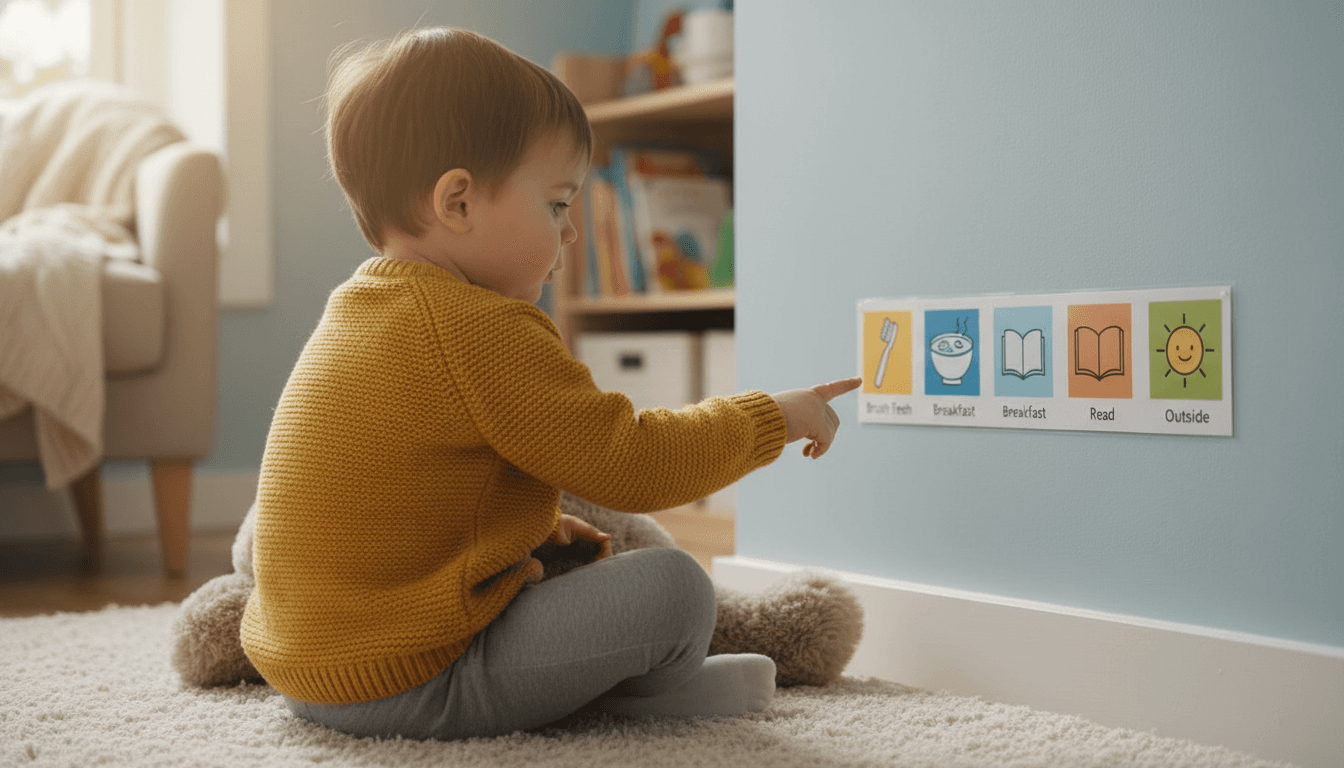
Visual schedules are the most fundamental tool. Create schedules for the most difficult routines — often mornings, transitions, and evenings.
Be specific and consistent. Use the same images every day. Place the schedule where the child naturally sees it.
Let the child participate — moving an image or checking off a step gives a sense of control and achievement.
Transitions and changes
Transitions between activities are often the most difficult moments. First-then boards can help: "First we clean up, then we go outside."
Prepare for changes in advance. If the usual schedule will change, show the new version the day before or in the morning. Highlight what's different.
Timers and countdowns — both visual and auditory — can help with transitions. "In 5 minutes, it will be time to stop."
Social stories
Social stories prepare a child for new or challenging situations. They describe what will happen, how it might look and feel, and what the child can do.
Example: a visit to the dentist. A social story can show the waiting room, the dentist's chair, the tools, and each step of the examination — with pictures.
Use calm, positive language. Focus on what the child can expect, not what might go wrong.
Communication boards
Many people with autism have limited spoken language, but that doesn't mean they have nothing to say. Communication boards give them a voice.
Start with the most basic needs: food, drink, bathroom, more, stop, help. Gradually expand with more words and categories.
In PicTalk, you can create communication boards with text-to-speech — the child taps the image and hears the word.
Tips for parents and educators
Start small. One schedule, one routine. Expand when it's working.
Be consistent across environments. Use the same images at home and at school. Share schedules between parents and educators.
Let the child own the process. Some children want to help choose images or arrange the steps.
Be patient. It may take time, but visual support is one of the most effective interventions for autism.