First-then boards: a guide for parents
Learn how to use first-then boards to help your child with transitions, motivation, and daily routines. Simple and effective.
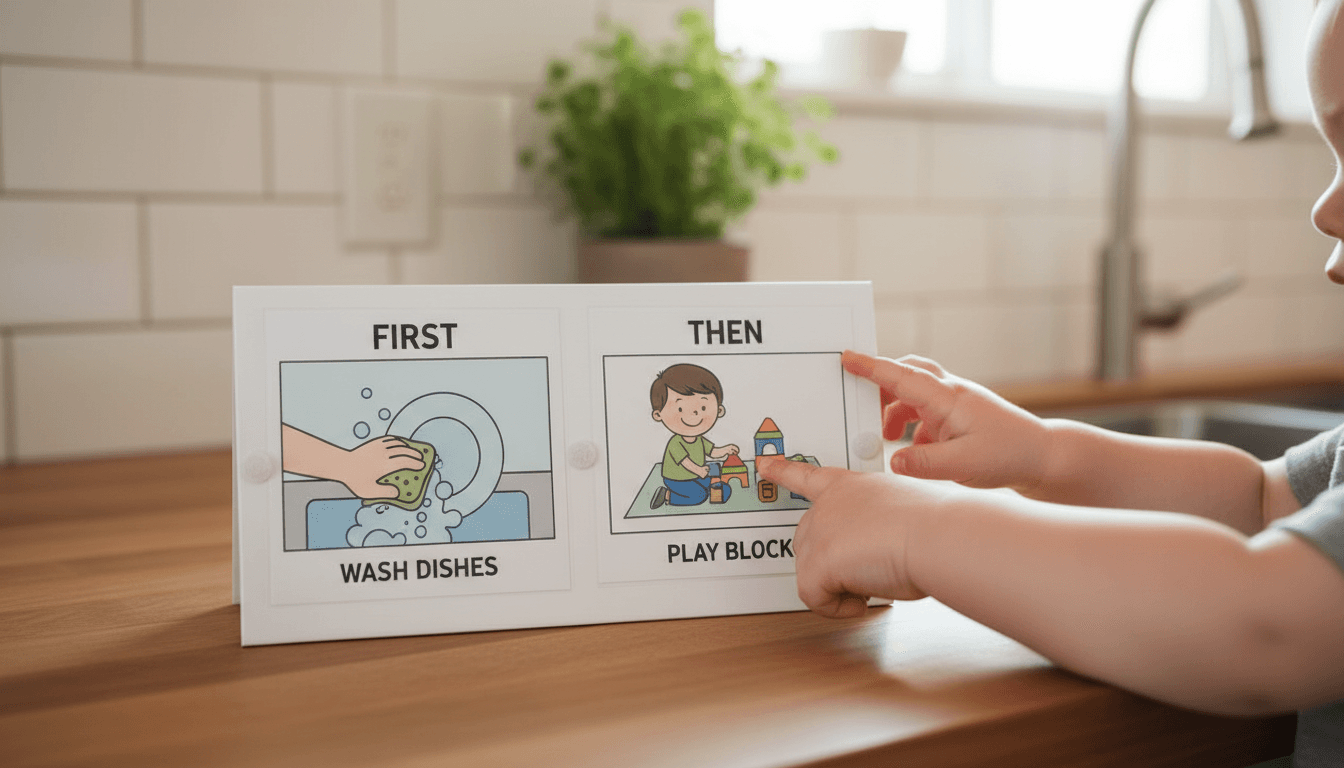
What is a first-then board?
A first-then board shows two steps: "First we do this → then we do this." It's one of the simplest and most effective visual support tools.
The principle is straightforward: the first activity is something that needs to be done, and the second is something motivating. "First we clean up → then we play." "First we eat → then we watch a movie."
First-then boards work for all ages but are especially effective for younger children and children who struggle with transitions.
When should you use first-then?
Transitions — when the child needs to switch from one activity to another.
Motivation — when the child needs to do something that isn't fun.
New situations — to show what's happening and what comes next.
Cooperation — instead of saying "you must", you show "first this, then this".
Examples: "First we brush teeth, then we read a story." "First we get dressed, then we go to the park."
How to do it
Choose two clear images — one for "first" and one for "then". Show the card to the child and point: "Look, first we do this, then we do this."
Keep the image visible during the entire activity. When the first step is done, point to the next: "We're done with this, now we do this!"
In PicTalk, choose "First-Then" as the board type, and you'll have a ready card in seconds.
Tips for success
Make the "then" activity motivating. It doesn't have to be a reward — it just needs to be something the child looks forward to.
Be clear and specific. "First we clean the room" is better than "first we do what we need to do".
Use the same card for the same situation until the child has learned the pattern.
Praise the child when they follow the card: "You did it! Now it's time for the fun part."